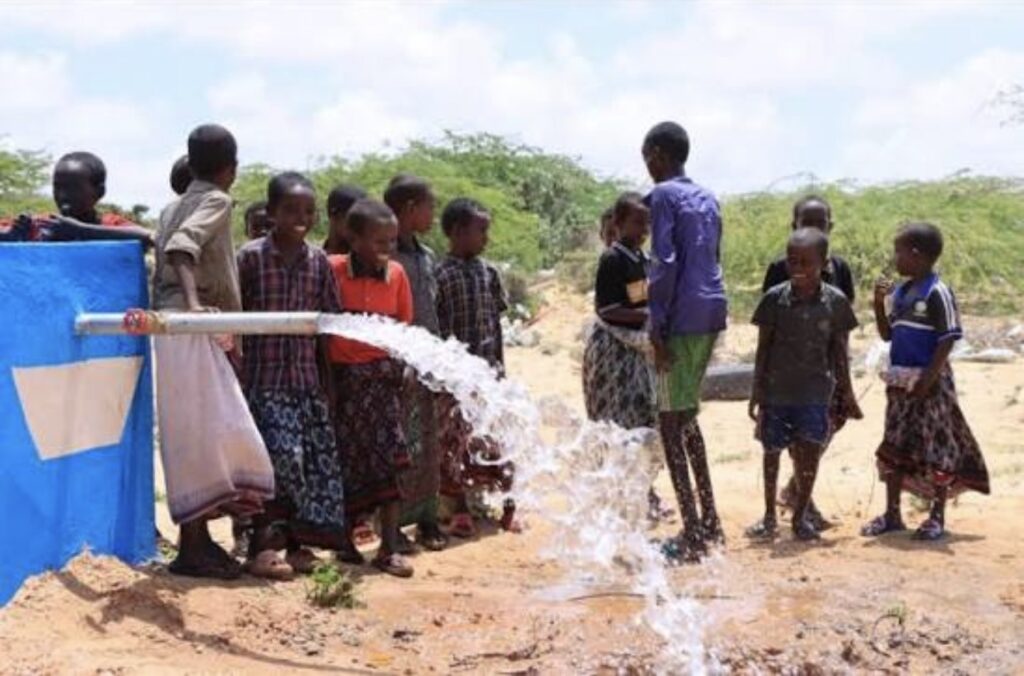
For years, communities across Somaliland and Somalia have lived with an invisible but persistent threat: unsafe water. In many rural villages and displacement sites, families relied on groundwater contaminated by high salinity, harmful bacteria, and other pollutants. While water was available, it was often unsafe to drink. Women and children walked long distances to collect it, households spent scarce income on transporting safer water, and outbreaks of waterborne diseases remained a recurring challenge.
In South Galkayo, one resident described the daily struggle: “The water was salty, and our children often became sick after drinking it. We had no alternative because it was the only source available.
Recognising that sustainable development requires more than temporary water trucking or emergency treatment, the Centre for Peace and Democracy (CPD), with support from UNICEF and funding from the African Development Bank (AfDB), introduced an innovative, technology-driven approach to water safety. Rather than responding only after disease outbreaks occurred, the programme invested in long-term infrastructure capable of providing communities with reliable access to safe drinking water.
The initiative combines two complementary technologies tailored to local contexts. Solar-powered Reverse Osmosis (RO) desalination systems remove excessive salinity and dissolved minerals from highly saline groundwater, while In-Line Chlorination (ILC) units automatically disinfect water flowing through community supply systems, maintaining safe chlorine residuals without requiring continuous manual dosing. Together, these technologies ensure that water reaching households consistently meets World Health Organization (WHO) drinking water standards.
Unlike conventional chlorination methods that depend heavily on trained operators and frequent manual intervention, the automated in-line systems provide continuous protection against microbial contamination. Powered by solar energy where appropriate, the systems also reduce operating costs, minimise dependence on fuel, and remain functional in remote, off-grid communities where reliable electricity is unavailable.
The programme extends well beyond technology installation. Community members, water management committees, and local authorities receive practical training on system operation, routine maintenance, water quality monitoring, and preventive maintenance. This local ownership helps ensure that the systems remain functional long after installation while strengthening the capacity of communities to sustainably manage their own water resources.
The scale of the intervention reflects the magnitude of the challenge. Across Somaliland and Somalia, CPD plans to install 120 In-Line Chlorination systems in high-risk communities identified through WASH vulnerability assessments and cholera hotspot mapping. The programme targets approximately 1.2 million people across districts including Dollow in Jubaland, Qardho in Puntland, South Galkayo in Galmudug, and Ainabo, El-Afweyn, Burao, Erigavo, Odweine, and Sheikh in Somaliland, together with surrounding internally displaced persons (IDP) settlements.
In South Galkayo, the solar-powered Reverse Osmosis desalination system represents another milestone. Once fully operational, it is expected to provide safe drinking water to approximately 15,000 households benefiting nearly 100,000 people who have long depended on saline groundwater unsuitable for human consumption.
The anticipated change reaches far beyond improved water quality. Reliable access to safe drinking water reduces the incidence of diarrhoeal diseases and other waterborne illnesses, lowering healthcare costs for vulnerable families and reducing pressure on local health facilities. Women and girls spend less time searching for safe water, allowing more time for education, childcare, and income-generating activities. Communities become more resilient to climate shocks and drought, while strengthened local management systems improve the sustainability of critical water infrastructure.
By integrating innovative technology with community ownership, capacity strengthening, and long-term systems management, CPD is demonstrating that access to safe water is not only a humanitarian response, it is an investment in public health, dignity, and resilience.
Across Somaliland and Somalia, every functioning desalination plant and every operational in-line chlorination unit represents more than new infrastructure. Together, they are transforming unsafe water into opportunity, helping build healthier communities where children can grow without the constant threat of preventable disease, and where safe drinking water becomes a lasting foundation for sustainable development.