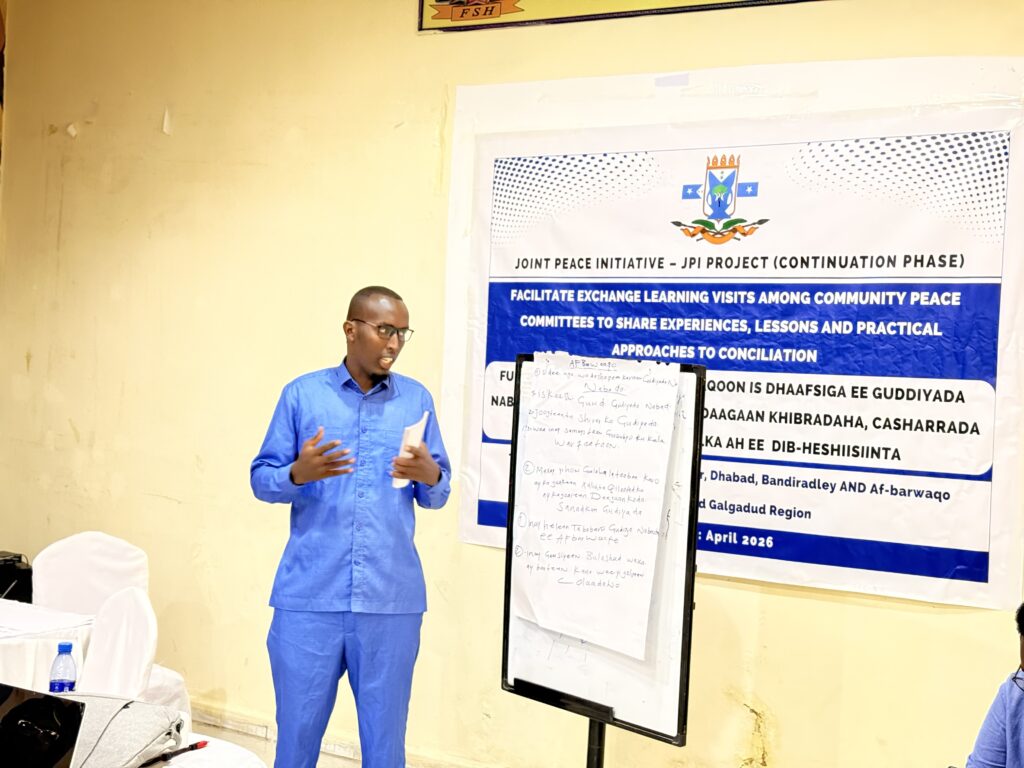
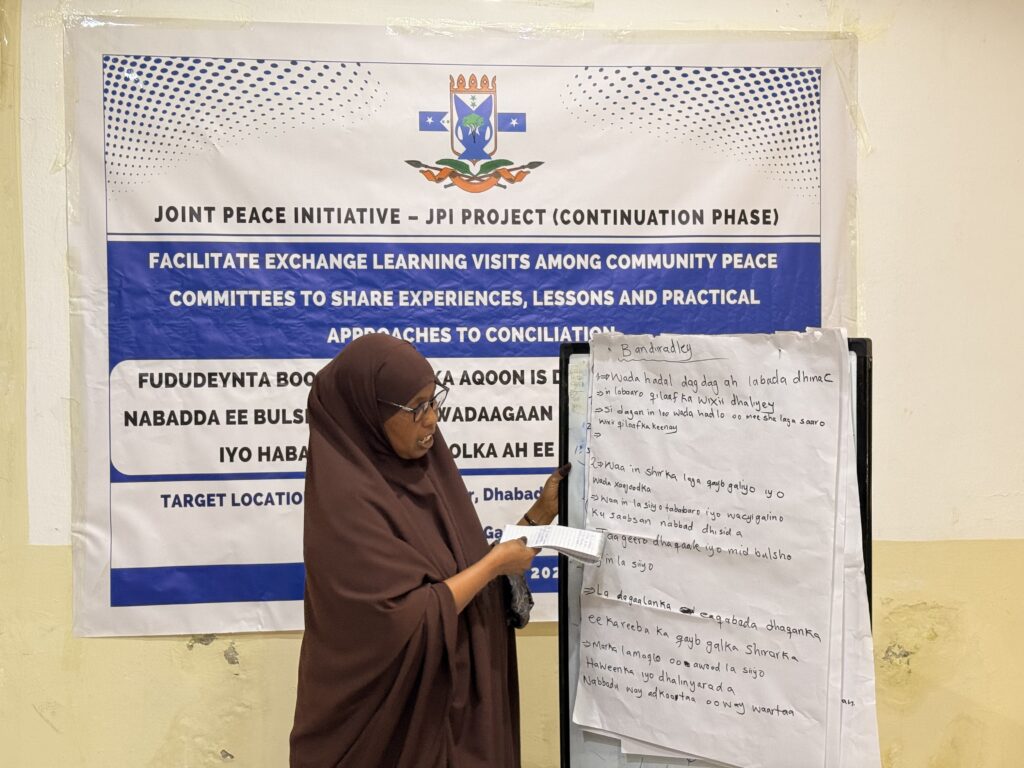
In communities affected by recurring conflict and social tensions, local peace committees often serve as the first line of response in preventing disputes from escalating into violence. Across South Galkayo and neighboring districts in Galmudug State, these community-led structures continue to play an important role in mediation, reconciliation, and promoting peaceful coexistence among communities.
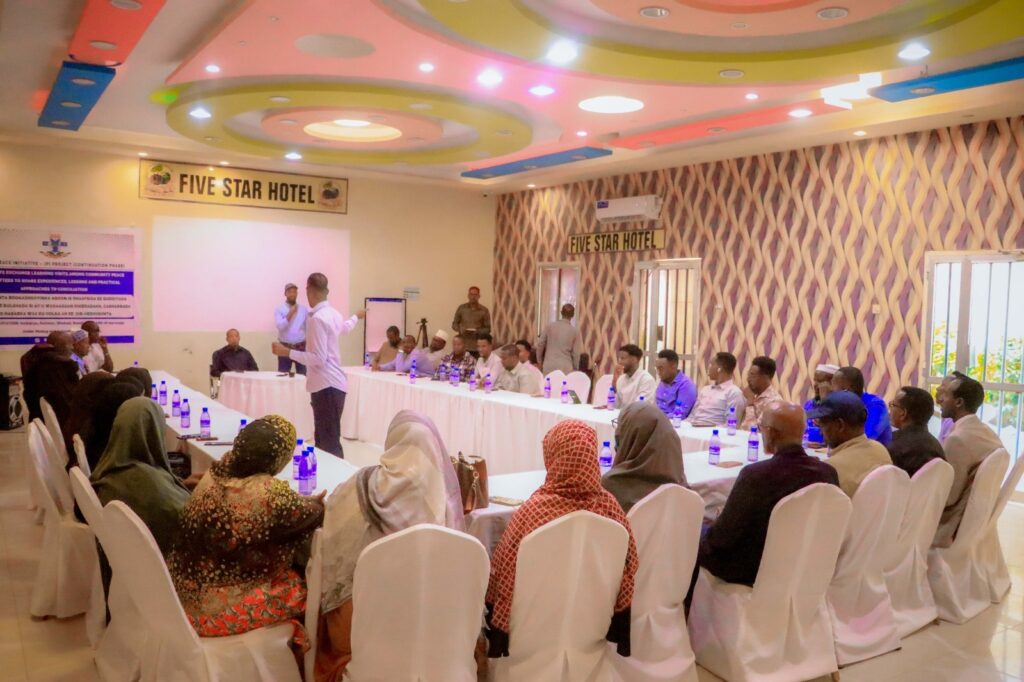
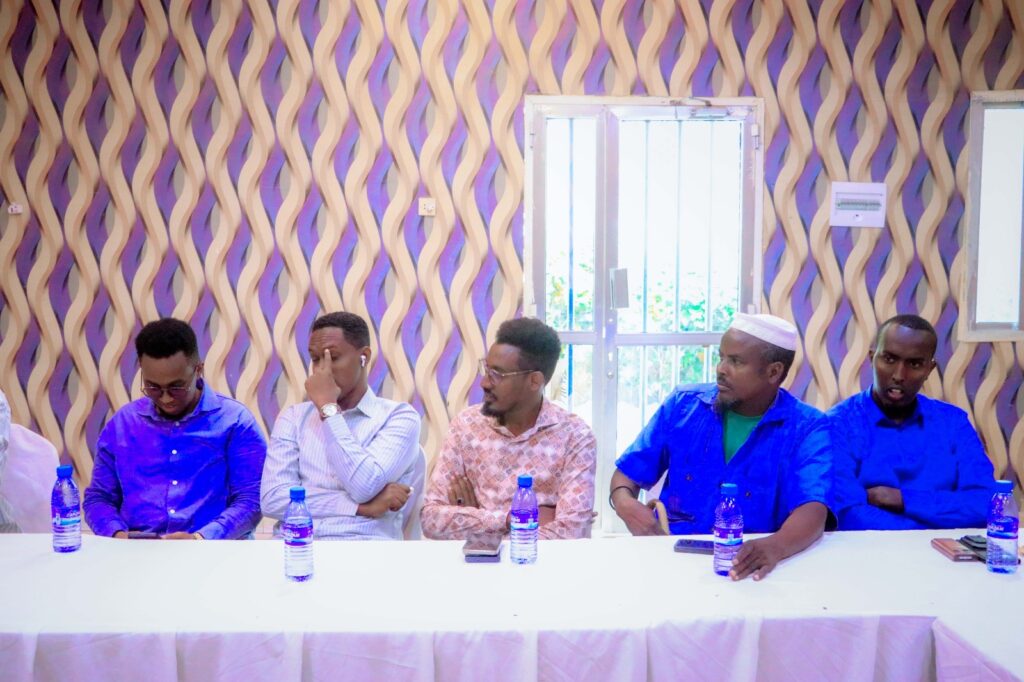
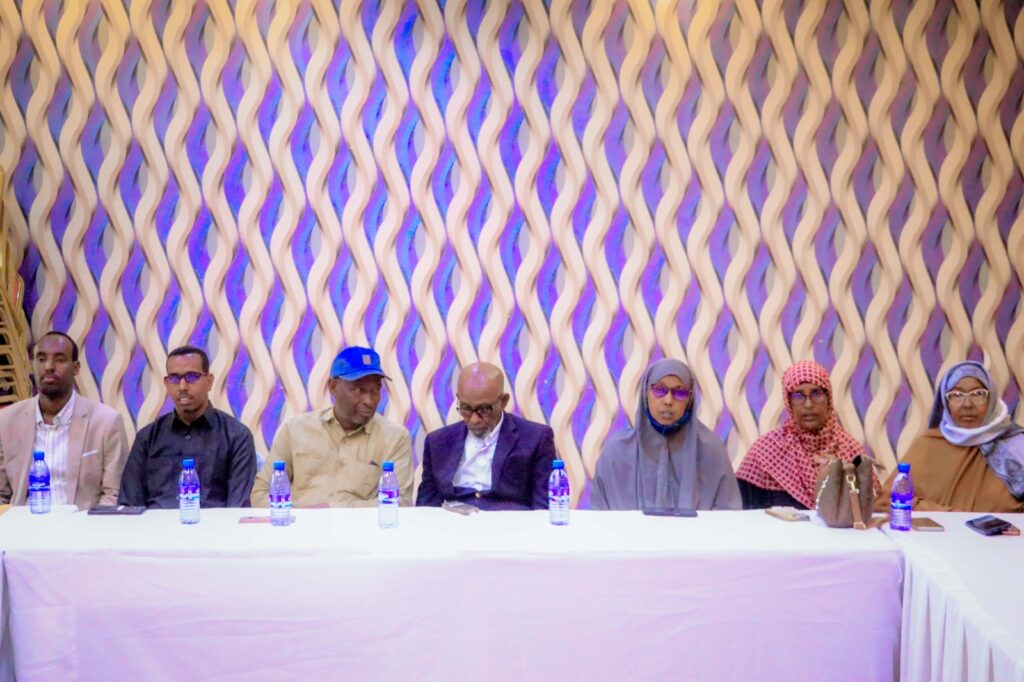
To strengthen collaboration and shared learning among these groups, the Centre for Peace and Democracy (CPD) organized a two-day Peace Committee Exchange Learning Visit that brought together 40 representatives from seven districts, including Bandiradley, Galdogob, Docoley, AfBarwaqo, Towfiq, Gelinsoor, and Dhabad. The initiative created a platform for peace actors from different communities to exchange experiences, discuss challenges, and identify practical approaches for improving local peacebuilding efforts.
The exchange learning visit focused on strengthening dialogue skills, improving coordination between committees, and documenting lessons learned from community-based conflict resolution initiatives. Participants engaged in interactive discussions, group sessions, and peer-to-peer learning activities centered around traditional Xeer systems, mediation practices, and locally led reconciliation approaches.
For many participants, the training provided a rare opportunity to learn directly from the experiences of other districts facing similar challenges. Participants openly discussed the root causes of local conflicts, barriers to reconciliation, and the importance of inclusive community engagement in peacebuilding processes.
“Before this training, many of us were working independently without enough coordination,” said Abdullahi Hassan, a peace committee representative from Gelinsoor. “Now we understand the importance of sharing information, learning from each other, and building stronger communication between communities.”
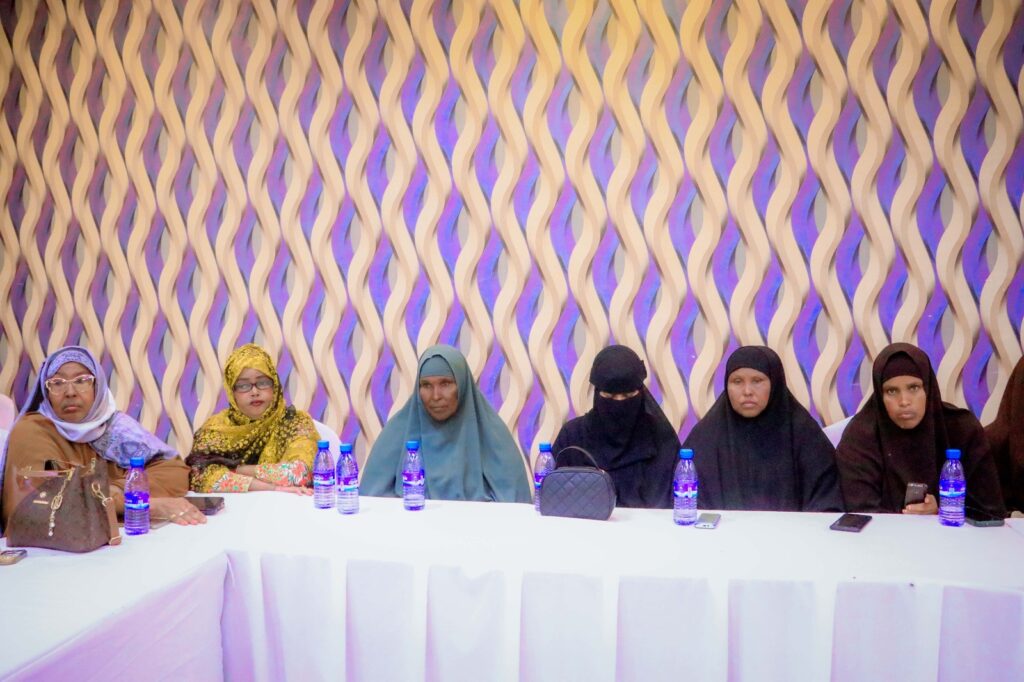
The training also highlighted the critical role women play in conflict prevention and reconciliation. Women participants emphasized that sustainable peace requires the inclusion of women’s voices in dialogue processes and decision-making structures.
“Women experience the impact of conflict every day within families and communities,” explained Hawa Mohamed from South Galkayo. “When women are included in peace discussions, communities become more united and solutions become more practical and lasting.”
Throughout the sessions, participants documented several best practices already being implemented at community level. These included elder-led mediation approaches, dialogue sequencing methods, community consultation forums, and local communication mechanisms used to reduce tensions before disputes escalate. The exchange also allowed committees to discuss common operational challenges such as limited resources, weak coordination channels, and the need for stronger community trust-building efforts.
One of the key outcomes of the learning visit was the development of a shared action plan aimed at improving collaboration between peace committees across districts. Participants agreed to strengthen communication channels, share early warning information more consistently, and support one another during community mediation efforts. The training also encouraged peace committees to adopt more inclusive approaches by engaging women, youth, religious leaders, and local elders in future reconciliation activities.
Beyond the discussions themselves, the exchange learning visit demonstrated the value of peer learning and community-driven knowledge sharing in fragile environments. By creating space for dialogue and reflection, the initiative helped participants identify practical solutions rooted in local realities and cultural understanding.
The assignment also reinforced the importance of documenting local peacebuilding experiences as part of broader institutional learning and resilience-building efforts. Through interviews, photography, activity documentation, and storytelling, the experiences and lessons captured during the visit can help inform future community dialogue initiatives and strengthen locally led peacebuilding programming.
As communities across Somalia continue working toward stability and resilience, initiatives that promote collaboration, learning, and inclusive dialogue remain essential in building trust and strengthening peaceful coexistence at community level.
This activity is part of the Joint Peace Initiative Project (JPI) implemented jointly by CPD and PSA under the Care Somalia International led consortium and funded by the Somali Stability Fund (SSF)